

In November 2021, the stock price for an electric vehicle company that had been for years thought of as a really odd electric golf cart company by the locals in Northern Nevada hit a record high that would not be broken for another three years. It was not alone. That year saw several other EV companies stocks reach new highs, even though many of them had nothing more than prototypes to show investors.
That rally ended in 2022, and that odd little company’s stock, Tesla, saw the worst year it ever had, with the rest of the EV companies that were along for the ride seeing the same. Even as Tesla continued to grow at an incredible rate and the narrative of an EV in every driveway in America was still alive and well, the market looked at EV stocks and decided they were overbought.
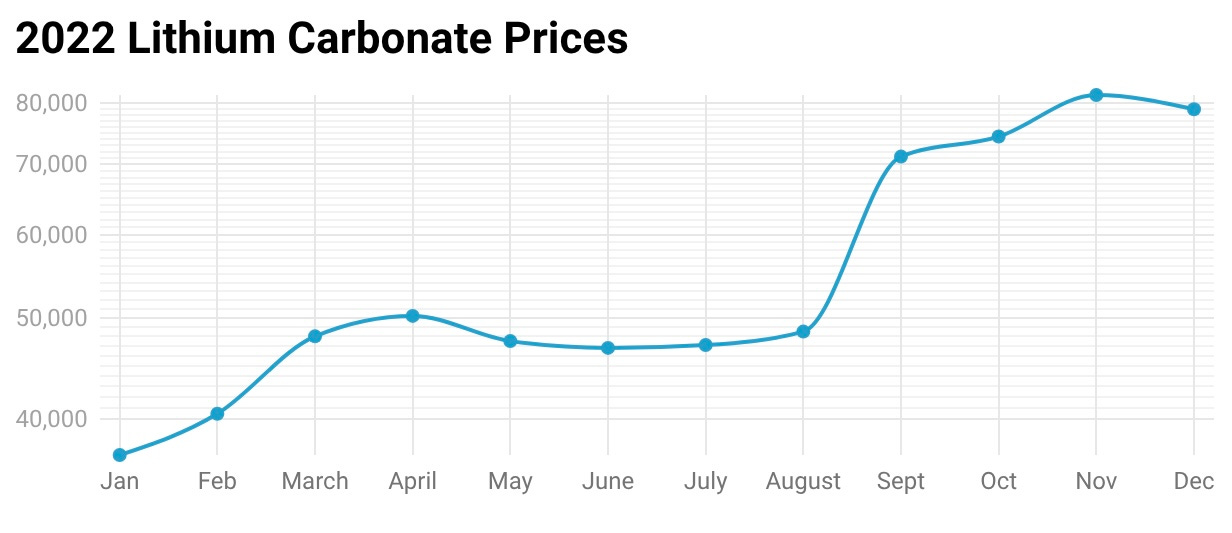
While the market soured on EVs, 2022 was also the year of a historic lithium rally, with battery-grade lithium carbonate soaring in the first quarter before hitting all-time highs in November and finishing the year up more than fivefold. While the investors retreated from EV manufacturers, lithium demand projections remained astronomical, sparking a hunt among investors to find companies in the lithium-ion supply chain instead.
Driven by a propaganda blitzkrieg, lithium-ion recyclers courted investors with a term originally coined in Japan for e-waste: urban mining. This catchphrase worked its way into pitch decks and analyst talking points, in an attempt to differentiate lithium-ion recycling from what most consumers viewed as a process that created a cheap and substandard product.
Through urban mining, recycling startups proposed that while manufacturers were waiting for traditional mines to get online, they could provide a faster and more environmentally friendly supply of lithium. But this concept wasn’t limited to startups. Even majors like Albemarle were pursuing urban mining opportunities.
This approach was only logical, as they and other miners were the ones who originally produced that lithium, and through recycling, they would be able to maintain control of that material almost indefinitely. That is why Albemarle in early 2023 announced a $1.3 billion Mega-Flex processing facility in South Carolina to handle diverse feedstock, including end-of-life batteries.
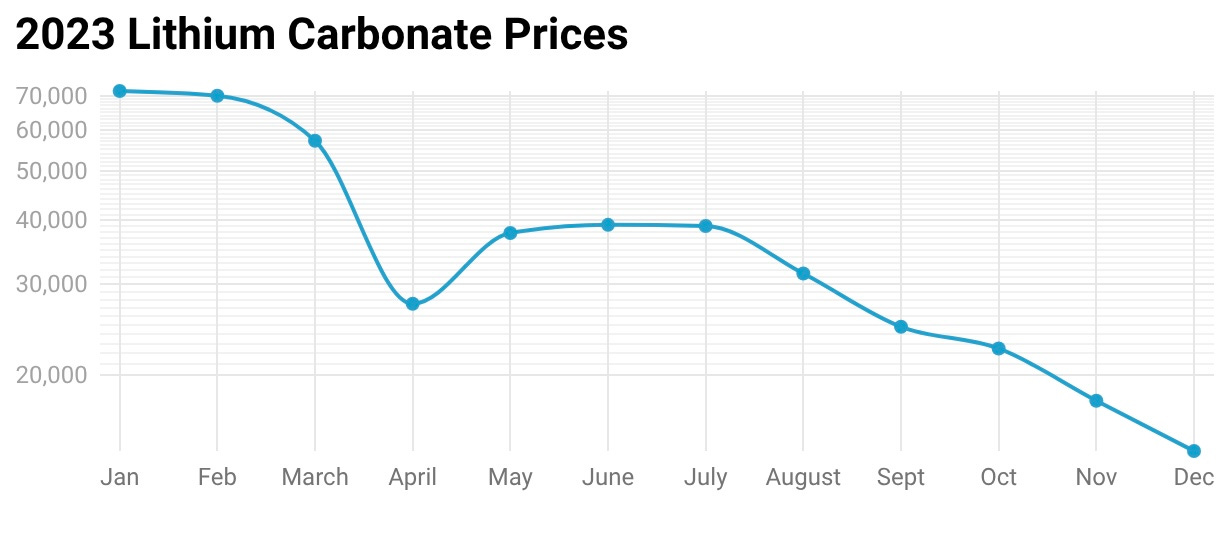
However, within just a couple of years of urban mining becoming the go-to catchphrase for startups, analysts, and the media, the realities of creating a domestic supply chain began to collide, and ambitious projects like the one announced by Albemarle were scuttled. Lithium prices collapsed, political winds shifted, and startups faced a much bleaker demand forecast.
Moreover, the technical complexity of refining battery-grade metals proved far more demanding than anticipated. Combined with state-by-state regulatory variations, rising construction costs, and long lead times on critical equipment, lithium-ion recyclers experienced severe headwinds.

Projects that were all but guaranteed a year before faced delays or were canceled altogether, and over the span of a year, three companies that had achieved some degree of success with the first stage of lithium-ion recycling closed their doors for good.
Li-Cycle filed for bankruptcy in May 2025. Lithion Technologies filed for creditor protection in October 2025. And Ascend Elements filed for Chapter 11 bankruptcy in 2026.
How a Pioneer Fell.
Ascend Elements, originally launched as Battery Resourcers in 2015, was a company built upon the early pioneering work in lithium-ion recycling of its founders. The original team filed their first patent in 2012, the same year that China concluded its Ten Cities and One Thousand Vehicles program and accelerated its push into electric vehicles and battery manufacturing.
By 2022, Battery Resourcers had created partnerships with cell manufacturers and investment groups who were chasing that EV in every driveway narrative. By leveraging its technology and the promise of bringing battery metals to the market faster than traditional mines, the company secured the capital needed to retrofit a site in Covington, Georgia for black mass production. Shortly afterward, it rebranded as Ascend Elements and announced plans in August 2022 to build the largest lithium-ion recycling facility of its kind in North America.
But this was not to be.
Legal complications and cost overruns at their Covington facility, construction delays and escalating expenses in Kentucky, and a management team that excelled at R&D but lacked the experience to transition from the bench to commercial scale, converged with a fundamental mistake domestic automakers had made. While trying to replicate China’s success with EVs, domestic automakers ignored just how China was able to create a thriving EV industry. Instead of treating EVs as entirely new platform they treated it as just another conventional vehicle, the result was unsustainable losses for each unit that rolled off a assembly line.
Automakers had no other recourse but to concede that the EV in every driveway was a narrative that, while attainable, could not be realistically achieved in the near term, and an aggressive expansion into the EV market was scrapped. Alongside a national election with a candidate who all but guaranteed a shift in policies away from EVs, domestic growth experienced its first real slowdown.
Deciding at the end of 2024 that a change had to happen, the Ascend Elements Board of Directors asked Linh Austin, who had joined the board in September of that year, to take a more hands-on role when it came to the company’s operations. This request proved to be just the beginning; by early 2025, he stepped into the role of President and CEO, and began to restructure the company from one that was focused on R&D with limited operations into one capable of achieving profitable commercial scale operations.

With this new focus the company successfully relaunched the Covington operations after an extended downtime for upgrades. That facility, originally built to produce just black mass, had been repurposed to refine battery-grade lithium carbonate using a proprietary process that utilizes carbon already present in the black mass. By eliminating the need for external carbon inputs, the approach proved both efficient and cost-effective.
But the financial damage already inflicted by changing markets and previous management missteps was just too extensive, and in April 2026, Ascend Elements filed for Chapter 11.
The legal team brought on to represent the company was able to take every objection presented to them and create reasonable, and even a few precedent-setting solutions that were able to satisfy the creditors’ demands, but the debt and the liens on facilities were too great, and the final outcome was all but unavoidable.
Over the four-month bankruptcy proceedings, the company sold off its main assets, from the Poland projects to the facility being built in Kentucky and the Covington location that had just recently restarted operations. What began as an effort to restructure the company ultimately shifted into a liquidation, and on August 17, 2026, a federal bankruptcy judge signed off on the final plan.

While the company that was Ascend Elements was gone, the team that successfully relaunched the Covington facility to do more than just create a recycling intermediate was able to purchase it out of bankruptcy, acquiring the facility free and clear of all prior liens and liabilities.

Led by Linh Austin, a veteran of the oil and gas industry, and backed by a venture capital firm specializing in energy transition technologies, the team launched R3 Lithium. With $15 million in Series A funding and approximately $1 billion in signed off-take agreements, the company has a single, unwavering mission: to build a domestic supply chain by refining battery-grade metals from recycled material, ensuring that critical resources are not lost overseas and securing a reliable supply for the United States manufacturing base for decades to come.
Analogies and Backgrounds
After noticing some job listings for R3 Lithium, I sent an email to them letting them know that when they were ready to exit stealth mode, I would love to do a follow-up to the Q&A I did in 2025. They replied back that they planned to release an announcement on September 10th and asked if I was aviable to do an interview with Linh.
What started out as a set of written questions that I sent to R3 Lithium, turned into a candid conversation that took place over the course of an hour-long phone call where I was able to ask Linh questions covering a wide range of topics, from the company’s goals to how the team’s background is uniquely suited to accomplish those goals.
CMB: Your background is in conventional energy production but instead of projects that create the fuel for power generation, you’re now creating products that are for energy storage. How is your background helping you move the company forward?
Linh Austin: I think it’s much more than myself, as you know, Mith. It’s a broad team, but the broad team comes from a background in energy, whether it’s refining or extraction. We don’t consider ourselves a recycler. There’s a lot of companies that do recycling in our market. Recycling as a technology in the U.S. has been around since the ’60s and ‘70s. It’s a very mechanical process.
We consider ourselves to be a refiner. That’s where I started my career, in refining, in oil and gas. We want to extract the critical minerals, and that’s exactly what refining does.
That’s where we are as R3 Lithium. We project that the Covington facility will account for more than 50% of U.S. total production of lithium carbonate in 2027. That’s from recycled content, produced domestically, at a single site in Georgia. We have the technology available to us that could be deployed for the other critical minerals, whether it’s nickel, manganese, and cobalt, but right now our focus is lithium. That’s our approach: do one thing really well, do it at scale, and then you earn the license to expand into other things.
Our first focus is being a highly successful and efficient lithium refiner. It’s the same mindset you see in oil and gas. A refinery brings in crude and separates it into different products. Are you going to be a good jet fuel producer? Gasoline? Diesel? That’s the discipline we’re applying here.
And much of the chemistry and equipment transfers directly over from traditional refining into metals refining from black mass. We’re not miners. We’re not the guys digging up rock and crushing it. That’s someone else’s expertise. My background in refining is exactly applicable to extracting critical minerals out of black mass.
CMB: What technologies does R3 Lithium have access to?
Linh Austin: We have access to the entire IP suite that the previous owners had, but the majority of that IP suite is related to the production of pCAM. What is specific that we’re focused on at the Covington facility is the extraction and refinement technology, particularly the refinement of lithium carbonate.
What we also believe is by being the only commercial-scale operations in the United States, we’re going to create a lot of our own unique R3 lithium IP. As you start to dial in different parameters, you just become more efficient. And that in itself generates a certain amount of IP because production scale accelerates learning. Learning then comes back into creating IP, and so it just becomes a really important loop.
CMB: Are you also exploring being a service provider instead of a strictly owner-operator?
Linh Austin: Right now we’re an owner-operator, but that’s an opportunity we can explore in the future. Our near-term plans are to complete the Covington facility and expand it. We currently have one line producing 2.5 kilotons of lithium carbonate. We’re planning to add a second line to reach 5 kilotons.
Given the demand profile for lithium carbonate in the United States and Europe, we see ourselves building multiple 5-kiloton platforms across both regions.
CMB: I was thinking about that modular system in the PR and how it’s going to affect how a site is classified, are they a large quantity generator or a large quantity handler of universal waste? Are you exploring how these units work within that framework?
Linh Austin: Absolutely. For us, it’s not just that, but it’s co-locating with partners who do some of that already. We see that we have an opportunity to be a very positive disruptor in terms of helping, as it were, to make that process much more efficient. As you start to co-locate these kind of things, the efficiency goes up, you can start to create an ecosystem around this.
For us, that’s where we see the longer-term play on this, is that you start to create certain geographical ecosystems across the country that drive a certain amount of efficiency in terms of collection, in terms of shredding, in terms of refining.
CMB: I was reading a study last night that once again reinforced that when it comes to lithium-ion recycling, even though you consider yourself a refiner, not a recycler, many of the costs will be the same, and the most immediate upfront cost is transportation. Creating geographic ecosystems is about the only way a domestic supply chain is going to happen.
Linh Austin:It definitely cuts down logistics and transportation costs. Right now, 95% of black mass gets exported, refined overseas, and then shipped back. That’s extremely expensive, especially when you’re shipping metals. And that’s where we change the economics.
CMB: One of the exceptions for the new BIS export rules allows for the export of black mass to be refined then re-imported back into the United States.
Linh Austin: The proposed export rule that you’re talking about, I think the spirit of it is right, which is, how do we keep critical minerals, located in the U.S.? But as you know, you’ve got to unlock the refining first.
The analogy is simple: if the U.S. produces all the oil we need but doesn’t have the refining capacity, it becomes a storage problem. You can’t make the jet fuel, diesel, and gasoline we use locally, you’re forced to ship it overseas and have it come back as the fuel you need.

CMB: That is an excellent analogy, in the United States much of the oil produced, the refinery infrastructure was not designed to handle it. How do you see R3 as part of the solution to that imbalance when it comes to lithium.
Linh Austin: Yeah, exactly. And so that’s where we see the shortfall in the supply chain, and that’s precisely the gap that we’re trying to plug and close. We’re not the only solution, mining is going to be an important factor, but we think we’re a quick parallel path that allows us to get to energy security much quicker. We can get a plant up and running in 24 months, and you’re talking about a typical mine from inception to startup, the minimum is 10 years.
CMB: With all these companies, including automakers, shifting to LFP, there is going to be more domestic demand for lithium than for nickel, cobalt, and manganese, and lithium carbonate is exactly what you guys are targeting as your primary revenue stream.
Linh Austin: Absolutely. I mean, and for us we don’t stop there, but that’s what we want to do really well, first. Do a really good job with lithium carbonate, and as LFP becomes a bigger and bigger part of the United States domestic portfolio, we’ve developed a flowsheet and pathway to process LFP as well. So for us, lithium carbonate and lithium hydroxide are obviously very near-term things that we feel really comfortable about, and that’s where we want to focus our immediate attention.
CMB: I’ve written about this before in the context of why many of the lithium-ion recyclers struggled to get to scale. It’s so important to do one thing well first, then move onto secondary or ancillary streams. It seems the companies that failed tried to do too many things at once. In fact, that’s what happened to your predecessor.

Linh Austin: Northvolt, the same thing, they raised, what, $12, $14 billion? So it wasn’t for a lack of funding. I think it was just a lack of focus and just trying to do too many things and not having the appropriate background.
You don’t usually find plumbers leading these companies, who actually have the practical background to understand how to build the site, but that’s exactly what these companies need to be successful.
Side Note: Before I could ask my first question, Linh wanted to know about my background. It is my background that gives me a unique perspective in the lithium-ion industry. For several decades I worked as a commercial plumber and, when I needed a break, a few years dabbling in ICS and automation. This is why I am able to cover the lithium industry from a technological and operational angle. Once you understand how something works, the rest falls into place.
CMB: I think that’s one of the problems that we’ve been seeing, we’re now up to three North American lithium-ion recyclers that have gone insolvent.
Linh Austin: It’s unfortunate because there’s a lot of fantastic technology out there, and the challenge is deployment. What we have at R3 Lithium is a management team built for commercial scale. We’re not the team you bring into an R&D facility. We take commercialized technology and scale it.
We’re not the folks that take something from a test tube to a demo to a pilot. Can we do that? Yeah, but that’s just not our sweet spot. Our sweet spot is finding a stranded or capable asset and taking it from proven commercial scale, putting in the right automation, and then scaling that business quickly.
CMB: Can you walk us through what happens from a time a battery enters your facility to when it exits the processing train.
Linh Austin: We do some recycling and shredding ourselves, but again, we are primarily a refiner. But basically the way it works at our Covington facility, and I would really welcome you to come out there anytime you get a chance, because I think it’s always better to see it in person.
Whether it’s end-of-life batteries or gigafactory scrap, we take it through the front door where it is sent through our shredding operations, and there’s a wet and a dry shredder, and that’s really just talking about the electrolyte content.
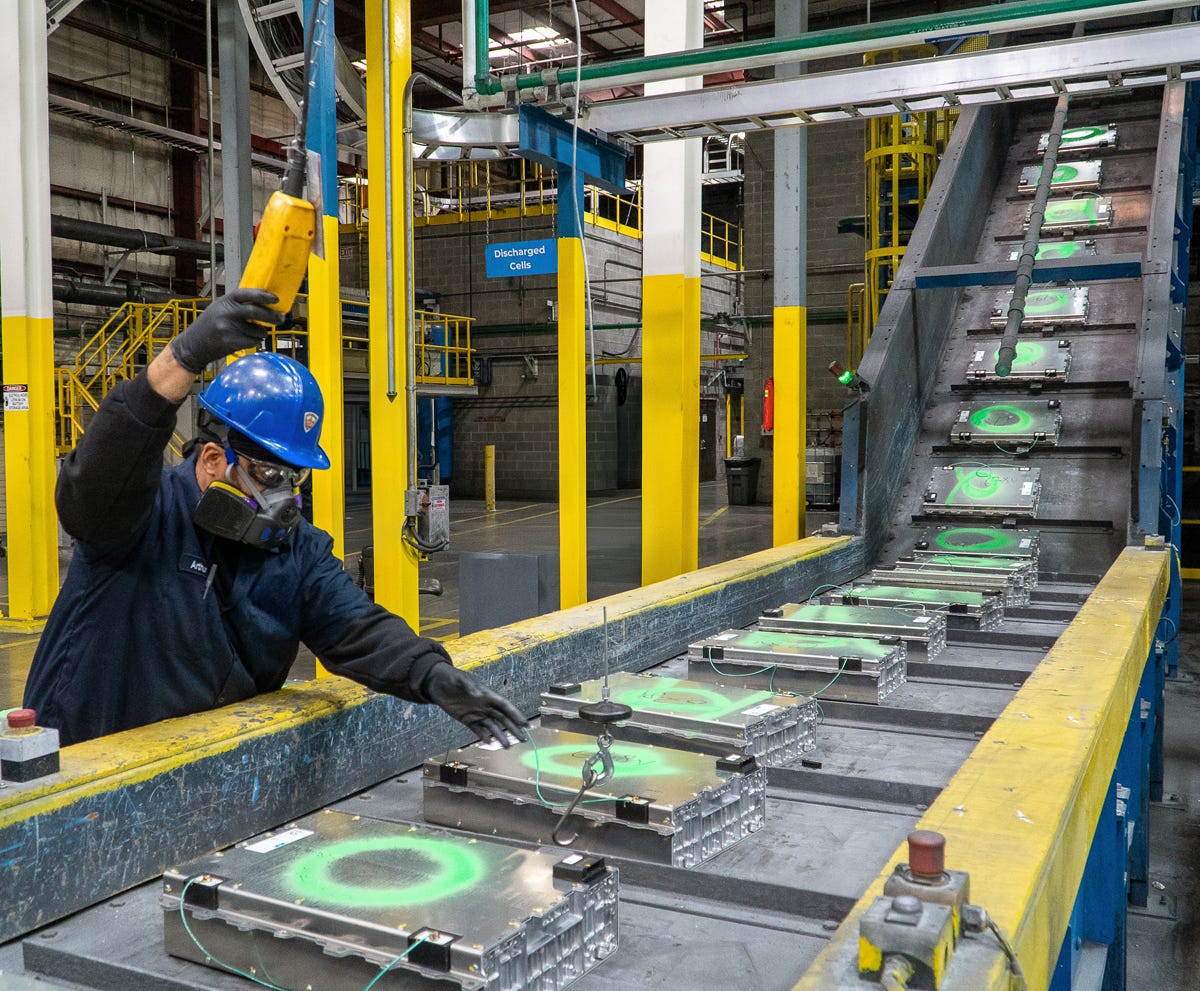
Then that gets ground into something that’s called black mass. And in black mass is where you have all the critical minerals, cobalt, manganese, lithium, graphite, and nickel.
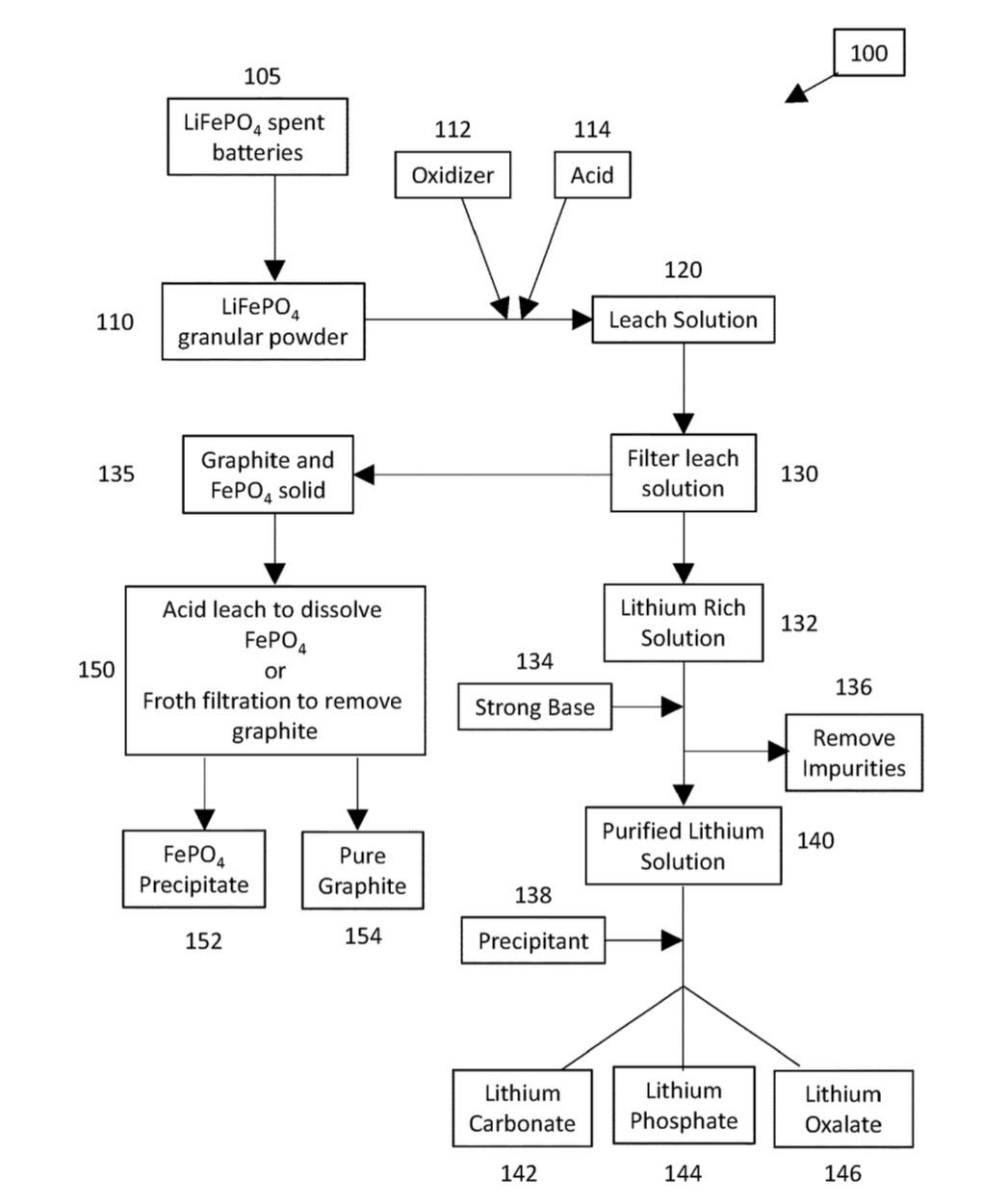
And what we do with our proprietary process, which is water-based, there are a few different processes on how to do that, but ours is we roast it through a calciner and then we float out lithium as a part of a water-based process.
Then we basically have lithium carbonate and something we call CMO, concentrated metal oxide containing the remaining metals cobalt, manganese, nickel, and graphite. Both products are sold into the same commodity market.
CMB: One of the things that is fascinating about your guys’ process is the way you create lithium carbonate, you’re using the graphite in the black mass as the carbon source to produce lithium carbonate. Usually companies inject CO2 into the system as the carbon source, but you’re using the graphite, which I would assume reduces your inputs.
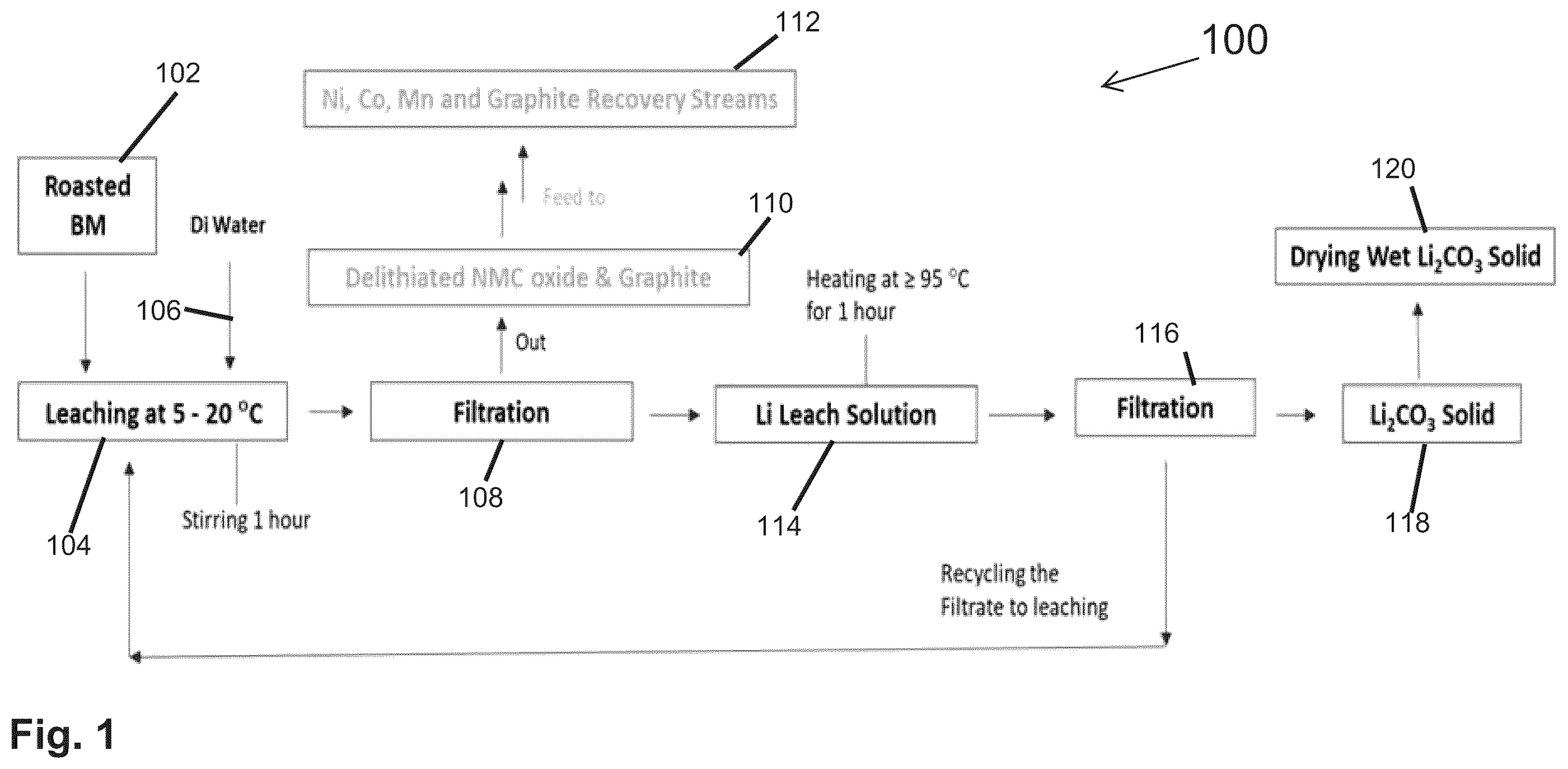
Linh Austin: It does, absolutely. That’s how we achieve better cost-effectiveness. The fewer steps you take in the process, the fewer reagents or chemicals you use, the better your cost profile. Fewer reagents, fewer chemicals, fewer steps mean more efficiency.
And the reason scale matters is that in a commodity market, scale allows you to achieve certain efficiencies. From our oil and gas background, we know two things matter in a commodity business: cost and scale.
CMB: And how do you sell your CMO (black mass)?
Linh Austin: It’s sold onto the open market. It’s a commodity that we have an off-take contract for.
CMB: Do you have concerns about the BIS rule with that contract? Do you have a domestic path for your CMO, or are you looking for exceptions under the new rule?
Linh Austin: We have a domestic path for the CMO, and we want to see if there’s an exception available to give ourselves the most commercial flexibility we can.
CMB: What is the status of getting the necessary permits needed from the Georgia EPD for operations?
Linh Austin: The Georgia EPD, like any responsible agency, wants to make sure we’ve got sufficient controls in place, and we welcome that. We’ve had productive conversations with them, we’ve invited them to see the facility, and the process is moving forward smoothly.
CMB: Because of how RCRA works when it comes to lithium-ion related feedstock, are you planning to expand either to a brownfield or a greenfield site for storage of feedstock, or are you going to continue the storage methods you have right now?
Linh Austin: I can’t really comment on how we’ll handle that going forward. That’s something the team will evaluate. At this point, we’re not storing end-of-life batteries as part of our operations. Our platform allows us to take black mass directly into the kiln and extract and refine the lithium in it.
We’ll be doing shredding in the future, but not today. Today we’re focused on capital upgrades to make the process as efficient as possible. We know it can operate at commercial scale now, but we want to ensure it operates efficiently. Our entire focus is on efficient execution.
That’s why the facility is currently in maintenance mode with no active operations. We’re deploying a capital program to upgrade all the equipment with the automation, sensors, and everything else typical of refining technology. We expect the facility to be up and running by Q3 of 2027. Before then, we’ll have resolved how we want to handle battery storage.
CMB: So a ballpark estimate on when you are going to start ramping up production is Q3 2027?
Linh Austin: Q3 2027. It would be sooner, but as you know Mith, it’s the long lead times. That’s the biggest issue right now. Some of these things just take time to get delivered. Automation and equipment have long lead times. As we get those deliveries in, we’ll install them and start it up. Right now, that timeline is Q3 2027.
CMB: How are you incorporating automation and AI into your operations?
Linh Austin: A lot of the automation we’re going to employ is pretty standard in the refining world around controls, MOVs (Motor-Operated Valve) and things like that. The I/O we’re putting in is going to be pretty bog standard. Where the AI comes in is that once you have the breadth of data from execution, you can use that data to learn and be more efficient. It allows our operations to be more efficient. It allows our controls to be tighter.
But you still need a base set of data to employ automation and AI to support that, right? And today we have a limited amount of that data, but we’ll have more once we start up and run continuously.
CMB: Can you share what your processing costs look like?
Linh Austin: We believe our cost structure is highly competitive with any lithium carbonate producer in the Western market. The things we control, like labor, power, and water, we demonstrated last year and feel good about. As we get into continuous production and have the data to share publicly, we’ll be able to put numbers behind that
CMB: So you fully expect to be able to hit a positive gross margin within a quarter after operation starts?
Linh Austin: Absolutely. We absolutely expect that from this team. We expect that of ourselves. And that’s why we’re putting in the automation and controls we are, because we can operate it today, but we don’t want to operate inefficiently. The capital program is precisely to do that.
CMB: I would be remiss if I didn’t ask you this question. Is there any plans? I know R3 is brand new, but are there any plans to go public?
Linh Austin: We’ll pursue whatever capital structure best supports our growth and lets us build these facilities at the pace the market needs. Access to capital is important for us to scale the business as quickly as we think it needs to scale to support the critical mineral supply chain, and we’re going to be disciplined about finding the right path to get there.
CMB: I want to talk about the bankruptcy of Ascend Elements for a bit, however I don’t think there is a need to dwell on it to much, but the question I need to ask is what makes R3 Lithium different?
Linh Austin: R3 Lithium is not Ascend Elements 2.0. The technology at Covington was proven before we acquired it. That facility produced 99%-purity lithium carbonate from 100% recycled content at commercial scale. We acquired it for $3.5 million, free and clear of legacy liabilities, on a facility that represented $150 million in original investment. That fundamentally resets the economics.
We’re a very different company with a different vision, different values, and a different mission.
I would like to thank Linh Austin and the incredibly talented team at R3 Lithium for taking the time to talk to me and to answer my questions.
If you found this article valuable, consider becoming a subscriber. The Critical Materials Bulletin is supported by readers, and for $5 a month or $55 a year you can help fund research that produces clear, no nonsense reporting that informs and advances the discussion on critical materials and battery metals.
Alternatively, if do not want to commit to a subscription, you can instead buy Abe a treat or two. And in doing so you can help support my goal of taking the Critical Materials Bulletin on the road, to visit these facilities as they launch, and to continue my conversations with these companies in person.
Buy

DISCLAIMER: This article should not be construed as an offering of investment advice, nor should any statements (by the author or by other persons and/or entities that the author has included) in this article be taken as investment advice or recommendations of any investment strategy. The information in this article is for educational purposes only. The author did not receive compensation, from any of the companies and or persons mentioned to be included in the article.